Expert Guide to Prefab Residential Buildings inE the UAE: Building Smart, Sustainable Living
The UAE’s construction industry is increasing rapidly, due to fast urbanization, sustainability goals, and demand for affordable housing solutions. Prefab buildings have evolved as one of the most reliable, innovative solutions—combining quality, speed, and design adaptability—and are now a key category in the market listings, including those found on platforms like Yellow Pages.
In this detailed guide, you will discover everything you need to know about prefabricated residential buildings in the UAE, including how they are constructed, what materials are used, their diverse advantages, their distributions, and how they compare with traditional construction.
What Are Prefab Residential Buildings?
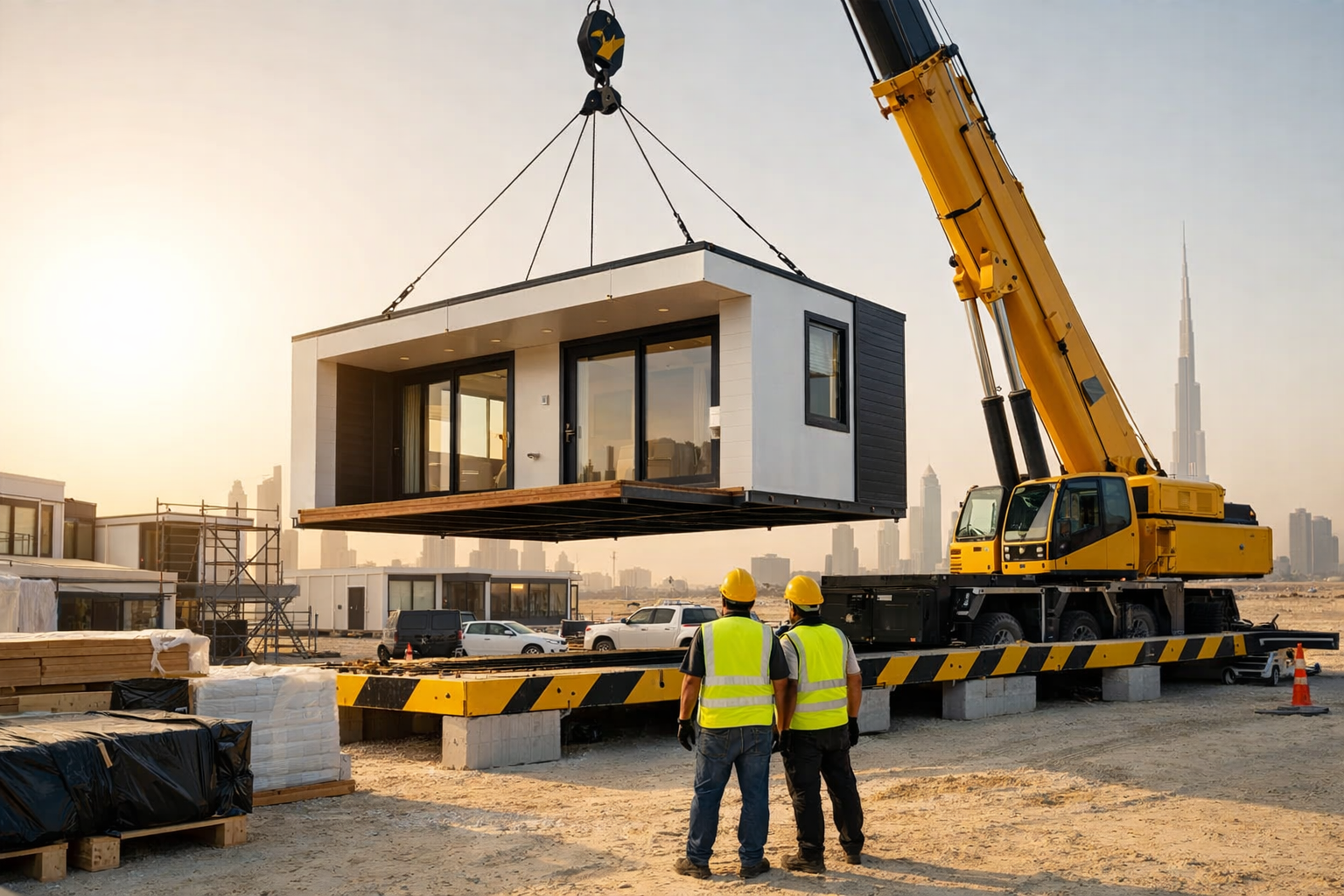
These are the homes or living structures that are manufactured in a controlled factory setting and then transported to the site for final assembly.
Unlike traditional construction, prefab relies on high-precision tech, modular structures, and standardized
quality control, making the process of construction more fast and efficient.
UAE Prefab Construction Industry (2026): Trends, Growth & Overview
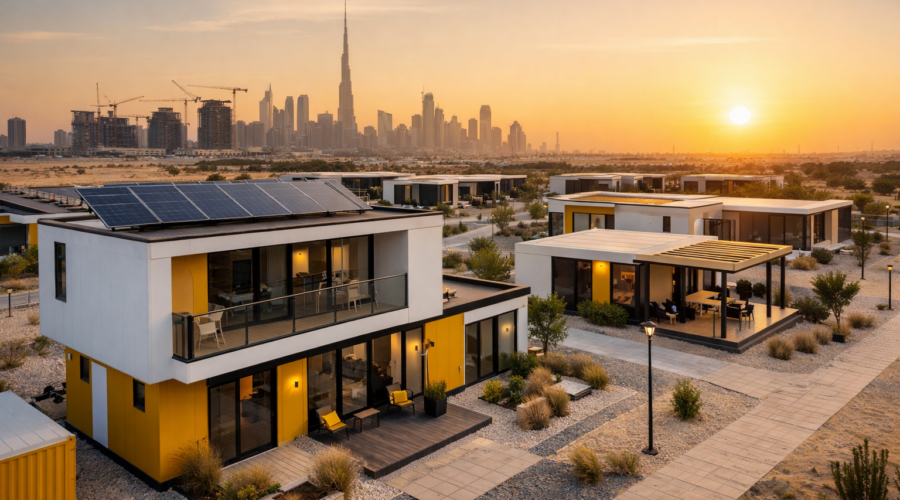
Driven by the UAE’s Vision 2030 and its forward-thinking sustainability projects, there is a growing demand for affordable residential housing in Dubai, Abu Dhabi, and Sharjah, alongside the rapid growth of industrial and logistics zones. This dual pressure is increasing the need for efficient, modular building solutions.
From cost-effective homes to factory-built warehouse structures, the prefab industry is creating an innovative and dynamic construction landscape. Government bodies and private contractors increasingly prefer prefab building in UAE due to its great compliance, scalability, and predictable project timelines.
Prefab solutions are now widely used for:
- Prefab houses in the UAE
- Labor accommodations
- Luxury villas
- Prefabricated cabins
- Prefab warehouses projects
Types of Prefab Residential Buildings
1. Modular Prefab Houses
Modular buildings are manufactured as complete, finished modules and joined like building blocks on-site. This precise method makes them ideal for the fast, high-quality construction of villas and gated communities.
2. Panelized Prefab Homes
Panelized prefab homes involve the off-site manufacturing of core components like walls, roofs, and floors as separate units. This approach offers greater flexibility for custom home designs and complex layouts. It is a particularly more budget-friendly solution for creating personalised, custom-made homes without sacrificing quality.
3. Prefabricated Cabins
Prefabricated cabins are compact, pre-assembled units usually used for staff accommodations and temporary housing solutions. This functionality has made them a famous and growing segment in the UAE’s prefab market.
4. Volumetric Prefab Units
Volumetric prefab units are fully completed rooms constructed entirely in a factory, just needing minimal on-site assembly. This effortless process results in the fastest possible installation in no time.
From Design to Move-In: How Prefab Residential Buildings Are Built
Ever wondered how prefab homes are built? Unlike on-location construction, they are manufactured from factory-built units. This construction process reduces construction time by up to 50% compared to traditional buildings. Let’s break down the exciting process.
Step 1: Design & Planning
- Designing the look and layouts
- Structural analysis, ensuring high security and best quality
- Planning MEP(Mechanical, Electrical, and Plumbing) integration
Step 2: Factory Manufacturing
- These buildings are manufactured from components crafted off-site
- Fine cutting and precise manufacturing
- Quality checks at every stage of fabrication
Step 3: Transportation
- After manufacturing these modules transported to the site
- Timely delivery planning to avoid delays
Step 4: On-Site Assembly
- After delivering the components on-site the foundation is prepared
- Modules are installed carefully
- Utility connections are fitted like electricity, gas, telecom etc…
Step 5: Final Finishing
- Interior fitting and final touches
- Exterior finishing
- Safety and compliance checks
Materials Used in Prefabricated Cabins and Homes
The materials used in prefab cabins are precisely selected to meet UAE weather and safety standards.
Common Materials Include:
- Structural steel: Protection against rust
- Sandwich panels: The PU, PIR, and EPS fillings are sandwiched between two outer metal sheets, providing thermal insulation
- Fiber cement boards: These are durable, fire-resistant, and low-maintenance cladding materials
- Aluminum and galvanized steel frames: Strong, lightweight, and rust-free structural skeletons
- Fire-rated insulation materials: Offering fire resistance
Beyond Speed: The Core Benefits of Prefab Construction
Prefabricated cabins and homes are in high demand as more people are choosing prefab residences than ever before, and for good reason.
Key Advantages include:
- Faster timelines
- Estimated and stable prices
- Minimal disruption, quick turnaround
- Sustainable practices reduces construction waste
- Ongoing quality checks
- Easy transportation and expansion For contractors and developers, prefab solutions also mean higher ROI and faster occupancy.
A Comparative Look: Prefab vs. Traditional Construction
Learning the difference between prefab houses and traditional buildings helps make informed decisions.
Prefab buildings offer fast construction, reduce waste, are relatively high in price, greater design flexibility, built in a controlled factory setting, and highly precise structures.
Whereas traditional buildings are constructed on-site, it is a slow process, variable rates, high wastage, and more complex for future renovations. Prefab clearly outperforms traditional construction in efficiency and sustainability.
How to Choose the Right Prefab Building Manufacturer in UAE
Working with reliable prefab manufacturers ensures long-term performance and safety. When selecting a supplier, you must consider:
- Proven track records in residential & industrial prefab
- Following all the UAE building rules and standards
- Offering In-house manufacturing facilities
- Customization options to meet your unique needs
- Provide dedicated customer support after-sales
Conclusion:
Prefab homes are changing how the UAE construction is offering speed, efficiency, and sustainable materials. By learning how they are made, the styles available, and how they differ from regular homes, so homeowners and developers can choose wisely. Backed by a growing industry, prefab cabins provide smart, durable, and modern housing solutions.
Ready to explore prefab living? Get a free consultation with our experts now! (CTA)
FAQs: Prefab Residential Buildings in UAE
Are prefab residential buildings suitable for UAE climate?
Yes. They are designed with thermal insulation, heat resistance, and corrosion protection for desert conditions.
How long do prefab houses last?
With proper maintenance, prefab houses can last 30–50+ years, comparable to traditional buildings.
Can prefab homes be customized?
Absolutely. Layouts, finishes, and sizes can be tailored to residential, luxury, or workforce needs.
Are prefabricated cabins permanent structures?
They can be temporary or permanent, depending on the foundation type and materials used.