Top Fencing Supplier in UAE: Complete Guide to Fencing Solutions in Dubai & Beyond
Introduction: Why Choosing the Right Fencing Supplier in UAE Matters
When it comes to protecting your property, defining boundaries, or enhancing the aesthetic appeal of a space, fencing plays an irreplaceable role. Whether you manage a large industrial facility in Jebel Ali, a luxury villa in Palm Jumeirah, or a construction site in Abu Dhabi, selecting the right fencing supplier in UAE is the single most critical decision you will make. The UAE’s unique climate — intense heat, salt-laden coastal air, sandstorms, and humidity — demands fencing materials and systems that are specifically engineered for durability under these extreme conditions.
The UAE fencing market has evolved significantly over the past decade. What was once a simple supply-and-install industry has transformed into a highly specialized sector offering advanced anti-intrusion systems, smart perimeter solutions, and eco-friendly fencing alternatives. This comprehensive guide will help you navigate the landscape of fencing suppliers in UAE, understand the types of fencing available, and make an informed choice that aligns with your security, aesthetic, and budgetary needs.
What Makes a Reliable Fencing Supplier in UAE?
Not all fencing suppliers in UAE are created equal. A trustworthy and professional supplier distinguishes itself through several key factors that go beyond simply stocking a range of fencing products.
The first hallmark of a reliable fencing supplier is compliance with international standards. In the UAE, reputable fencing suppliers ensure their products conform to British Standards (BS), American Society for Testing and Materials (ASTM) standards, and ISO certifications including ISO 9001 for quality management, ISO 14001 for environmental management, and ISO 45001 for occupational health and safety. These certifications are not merely paper credentials — they represent a commitment to consistent product quality, safe installation practices, and environmentally responsible manufacturing.
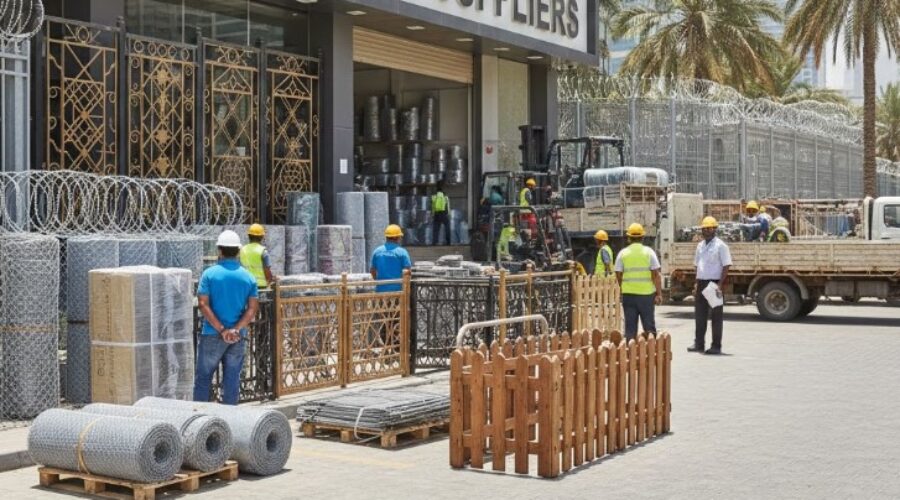
The second factor is product range and customization capability. Top fencing suppliers in Dubai and across the UAE maintain extensive inventories of chain link fencing, welded mesh panels, palisade fencing, aluminium fencing, barbed wire systems, and temporary hoarding. More importantly, they offer customization services — tailoring wire diameter, mesh aperture, coating type, height, and color to match precise project specifications.
Third, installation expertise matters enormously. A supplier who only sells products but does not offer professional installation creates a significant liability gap. The best fencing companies in UAE provide end-to-end services: site survey, design consultation, material supply, professional installation, and post-installation maintenance support.
Finally, geographic coverage across all seven emirates — Dubai, Abu Dhabi, Sharjah, Ajman, Ras Al Khaimah, Fujairah, and Umm Al Quwain — ensures that a supplier can serve multi-site projects and respond quickly to urgent requirements anywhere in the country.
Types of Fencing Available from UAE Suppliers
The UAE fencing market offers a remarkable diversity of fencing systems, each designed to fulfill specific functional and aesthetic objectives.
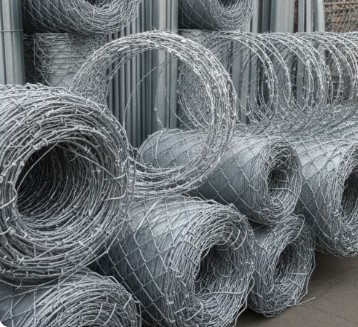
Chain Link Fencing remains the most widely used fencing solution in the UAE across industrial, commercial, and residential applications. Manufactured from galvanized steel wire woven into a diamond-pattern mesh, chain link fences offer exceptional strength-to-cost ratio. Hot-dip galvanized versions provide superior corrosion resistance compared to electro-galvanized alternatives, making them ideal for coastal and industrial environments. Wire diameters typically range from 1.5 mm to 5.0 mm, and PVC coating in green, black, or custom RAL colors can be applied for enhanced aesthetics and additional corrosion protection.
Welded Mesh Panel Fencing is increasingly popular for high-security applications including schools, government facilities, data centers, and utility installations. Unlike chain link, welded mesh panels cannot be easily deformed or cut without specialized tools, providing a superior anti-intrusion barrier. Standard panel heights range from 1.2 m to 3.0 m, with anti-climb profiles available for maximum security applications.
Palisade Fencing provides robust perimeter protection for industrial zones, power stations, and critical infrastructure. Its distinctive sharp-tipped pale design acts as both a physical and psychological deterrent. Steel palisade fencing systems are hot-dip galvanized or powder-coated and comply with European standard EN 13458.
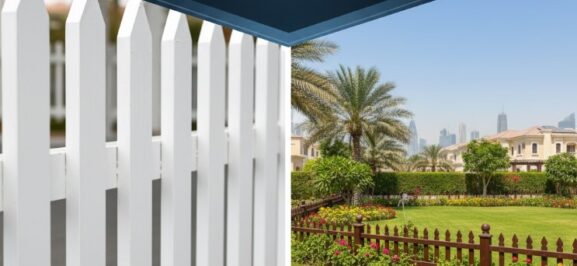
Aluminium Fencing is the premium choice for residential villas, luxury developments, and decorative applications. Lightweight yet strong, aluminium does not rust and requires minimal maintenance over its lifespan. Custom powder-coating allows aluminium fencing to match any architectural palette.
Barbed Wire and Concertina Razor Wire are deployed atop existing walls or fences to create additional deterrent barriers. Concertina coils are particularly effective for high-security perimeters and are widely used at industrial plants, logistics hubs, and government facilities across the UAE.
Sand Fencing and Camel Fencing address the unique challenges of UAE’s desert environment. Sand drift fencing controls the movement of sand across roads, agricultural land, and development sites, while camel fencing protects highways and properties from camel intrusion — a significant safety hazard in rural emirates.
Industrial vs. Residential Fencing: Understanding the Difference
One of the most important distinctions a fencing supplier in UAE must be able to navigate is the fundamental difference between industrial and residential fencing requirements.
Industrial fencing prioritizes security, perimeter integrity, and longevity under harsh operational conditions. Factories, warehouses, oil and gas installations, desalination plants, and power stations require fencing systems that can withstand vehicle impact, resist cutting tools, and maintain structural integrity for decades with minimal maintenance. For these applications, heavy-gauge welded mesh panels, anti-climb palisade fencing, and reinforced post systems are the standard specification.
Residential fencing balances security with aesthetics. Homeowners in Dubai’s premium communities seek fencing solutions that enhance curb appeal, provide privacy, and complement their landscaping. Aluminium fencing, decorative wrought iron, wooden panels, bamboo screening, and glass balustrades all serve this market. The key for residential clients is finding a fencing supplier who understands that a fence is an integral part of the property’s architectural identity, not just a functional boundary.
Commercial fencing sits between these two extremes. Shopping malls, office parks, hotels, and retail developments require fencing systems that are presentable to the public while still deterring unauthorized access to service areas, plant rooms, and parking facilities. Powder-coated steel mesh panels with concealed fixings are a popular choice in this segment.
How to Choose the Best Fencing Supplier in UAE for Your Project
Selecting the right fencing supplier in UAE requires a structured evaluation process. Begin by clearly defining your project requirements: What area needs to be fenced? What is the primary purpose — security, privacy, decoration, or a combination? What is your budget, and what is the expected lifespan of the installation?
Once you have clarity on requirements, evaluate potential suppliers against the following criteria. Request evidence of certifications and international standard compliance. Ask for a portfolio of completed projects similar in scope and type to yours. Inquire about the warranty offered on materials and workmanship. Obtain at least three competitive quotations and ensure they are like-for-like — comparing specifications, not just prices.
Site survey capability is a non-negotiable requirement. A professional fencing supplier will conduct a thorough site survey before submitting a proposal, accounting for soil conditions, existing structures, access constraints, and local authority requirements. In the UAE, certain types of fencing in residential communities or near public roads may require NOC (No Objection Certificate) from relevant authorities, and a knowledgeable supplier will guide you through this process.
Finally, consider after-sales support. Fencing is a long-term asset, and occasional repairs, extensions, or modifications may be needed over its lifespan. A supplier with a dedicated after-sales team and ready access to spare parts and accessories adds significant value to your investment.
Conclusion: Invest in Quality Fencing for Long-Term Value in the UAE
The UAE’s construction boom and ongoing urban expansion mean that demand for professional fencing solutions will continue to grow across all sectors. Whether you are protecting a multimillion-dirham industrial facility or adding the finishing touch to a family villa, the fencing supplier you choose will directly impact the safety, appearance, and value of your property.
By prioritizing certified suppliers, demanding compliance with international standards, and insisting on professional installation and after-sales support, you can ensure that your fencing investment delivers maximum returns. The best fencing supplier in UAE is not simply the cheapest — it is the one that understands your specific requirements and delivers a solution engineered to last in the unique environment of the Emirates.